Millions of deserving families across Pakistan rely on the Benazir Income Support Programme (BISP) for financial assistance. However, many households have recently been declared ineligible due to updated records, changes in family circumstances, or incomplete survey information.
The good news is that the BISP Dynamic Survey provides another opportunity for families to update their information and undergo a fresh eligibility assessment. If your payments have stopped or your status has changed, understanding this process can help you avoid missing future assistance.
What Is the BISP Dynamic Survey?
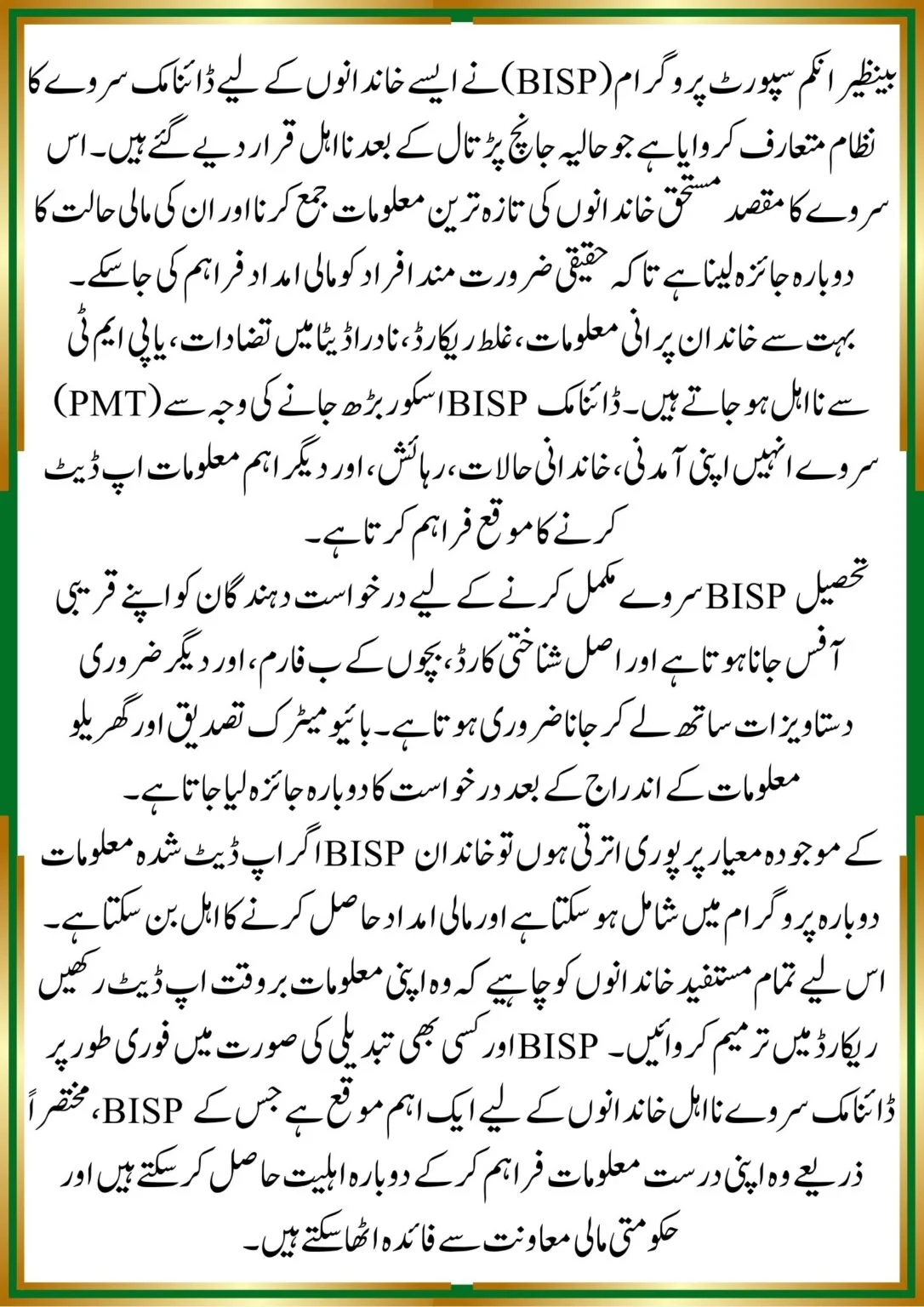
The BISP Dynamic Survey is an ongoing data collection and verification system introduced to keep beneficiary records accurate and updated.
Unlike older surveys that were conducted after several years, this system allows households to update their information whenever major changes occur in their family or financial situation.
The purpose is simple: ensure that financial support reaches the families who genuinely need it most.
Why BISP Introduced the Dynamic Survey
Economic conditions can change quickly. A family that was financially stable a few years ago may now be struggling because of inflation, unemployment, illness, or other hardships.
To address this issue, BISP introduced the dynamic survey so that households can report updated information and receive a fair reassessment based on their current circumstances.
This system improves transparency and helps the government identify deserving families more effectively.
How the BISP Dynamic Survey Affects Eligibility
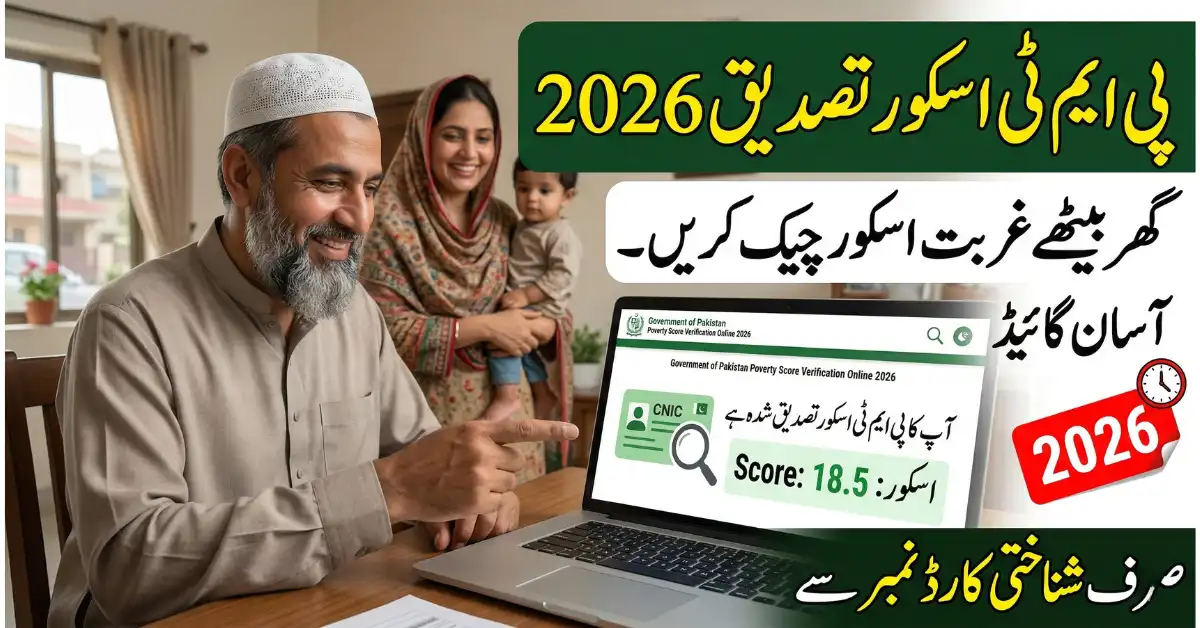
Information collected during the survey is used to calculate a household’s Poverty Means Test (PMT) score.
Several factors are considered during this evaluation, including:
Household Income and Employment
Officials review income sources, employment status, and overall financial conditions of family members.
Family Size and Dependents
The number of family members, children, elderly individuals, and dependents can influence eligibility.
Housing and Living Conditions
Details about home ownership, construction type, number of rooms, and utility access are considered.
Assets and Financial Activity
Ownership of vehicles, businesses, agricultural assets, livestock, and other resources may affect the PMT score.
Even small changes in these areas can impact a family’s eligibility status.
Why Families Become Ineligible for BISP
Many beneficiaries are surprised when they receive notifications stating they are no longer eligible. In most cases, eligibility changes occur for specific reasons.
Outdated Household Information
If family records are not updated regularly, discrepancies may appear during verification.
Examples include:
- Change of address
- Marriage or divorce
- Family members moving out
- Changes in income sources
Increase in PMT Score
A family’s PMT score may rise above the required threshold because official records indicate improved financial conditions.
NADRA Record Mismatches
BISP regularly verifies information through NADRA databases. Differences in CNIC records, family registration details, or marital status can create eligibility issues.
Failure to Complete Re-Surveys
Beneficiaries who do not update their information when required may be removed from the program until verification is completed.
How Ineligible Families Can Benefit from the Dynamic Survey
The survey serves as a second opportunity for households that believe their records do not accurately reflect their current financial situation.
Update Household Information
Families can report:
- Income reductions
- Job loss
- Changes in family size
- Educational details
- Housing conditions
Correct Data Errors
The survey allows officials to fix:
- CNIC mistakes
- Name spelling errors
- Incorrect family information
- Registration discrepancies
Request Fresh Eligibility Assessment
Once updated information is submitted, BISP conducts a new review. Families meeting current criteria may become eligible again according to program policies.
Step-by-Step BISP Dynamic Survey Registration Process
Completing the survey is straightforward if applicants follow the correct procedure.
Visit the Nearest BISP Tehsil Office
Applicants must visit their designated BISP Tehsil Office for registration and verification.
Official Website: 8171 BISP Portal
Bring Required Documents
Carry the following original documents:
Essential Documents
- Original CNIC
- Children’s B-Forms
- Active mobile number
- Family registration information
Supporting Documents (If Applicable)
- Disability certificate
- Death certificate
- Income-related documents
- Utility bills
Complete Biometric Verification
Applicants must verify their identity through fingerprints to prevent duplicate registrations and fraud.
Attend the Household Interview
BISP representatives may ask questions regarding:
- Income sources
- Employment status
- Number of dependents
- Education details
- Housing conditions
Provide accurate and honest information during this stage.
Wait for Review and Verification
After submission, the information is reviewed through multiple verification systems. Processing may take several weeks depending on application volume and verification requirements.
Important Information Collected During the Survey
The BISP Dynamic Survey gathers detailed information to create an accurate household profile.
Personal Information
- CNIC details
- Family registration records
- Marital status
- Household composition
Financial Information
- Monthly income
- Employment type
- Business ownership
- Agricultural assets
- Livestock ownership
Education and Health Details
- School attendance
- Literacy levels
- Disabilities
- Major health conditions
This information helps determine whether a household qualifies for assistance.
Common Mistakes That Delay Approval
Many applications face delays due to avoidable errors.
Providing Incomplete Information
Missing details can trigger additional verification checks.
Using an Inactive Mobile Number
Applicants should provide an active number to receive updates and notifications.
Biometric Verification Problems
Fingerprint mismatches may require further identity verification.
Failure to Update NADRA Records
Outdated family records often create eligibility issues during assessment.
Latest BISP Dynamic Survey Update for 2026
BISP is increasingly relying on digital databases and real-time verification systems. This means families should ensure that their information matches NADRA records and remains updated at all times.
The government’s focus is now on continuous verification rather than waiting years for nationwide surveys. As a result, the BISP Dynamic Survey has become one of the most important tools for determining future eligibility and payment distribution.
Conclusion
The BISP Dynamic Survey offers an important opportunity for families who have been declared ineligible to update their information and request a fresh review. In many cases, disqualification occurs because of outdated records, incorrect data, or changes in household circumstances that were never reported.
Families should visit their nearest BISP Tehsil Office, provide accurate information, complete biometric verification, and ensure their NADRA records are up to date. While approval is not guaranteed, completing the BISP Dynamic Survey correctly gives deserving households the best chance of receiving future BISP support.
Frequently Asked Questions
Can an ineligible family apply again through the BISP Dynamic Survey?
Yes. Families can update their information and request a fresh eligibility assessment through the survey process.
Is the BISP Dynamic Survey free?
Yes. Registration, verification, and survey updates are completely free.
What documents are required for the survey?
Applicants usually need their CNIC, children’s B-Forms, active mobile number, and supporting documents if applicable.
How long does BISP take to review survey data?
The review process may take several weeks or a few months depending on verification requirements.
Does completing the survey guarantee approval?
No. Approval depends on whether the updated household information meets the current BISP eligibility criteria.